
51% of diners are willing to travel 10 to 20 minutes for a meal, while 45% often travel over 20 minutes.
This willingness to travel underscores that dining out is more about the destination than mere convenience.
1. It’s about the destination, not the distance
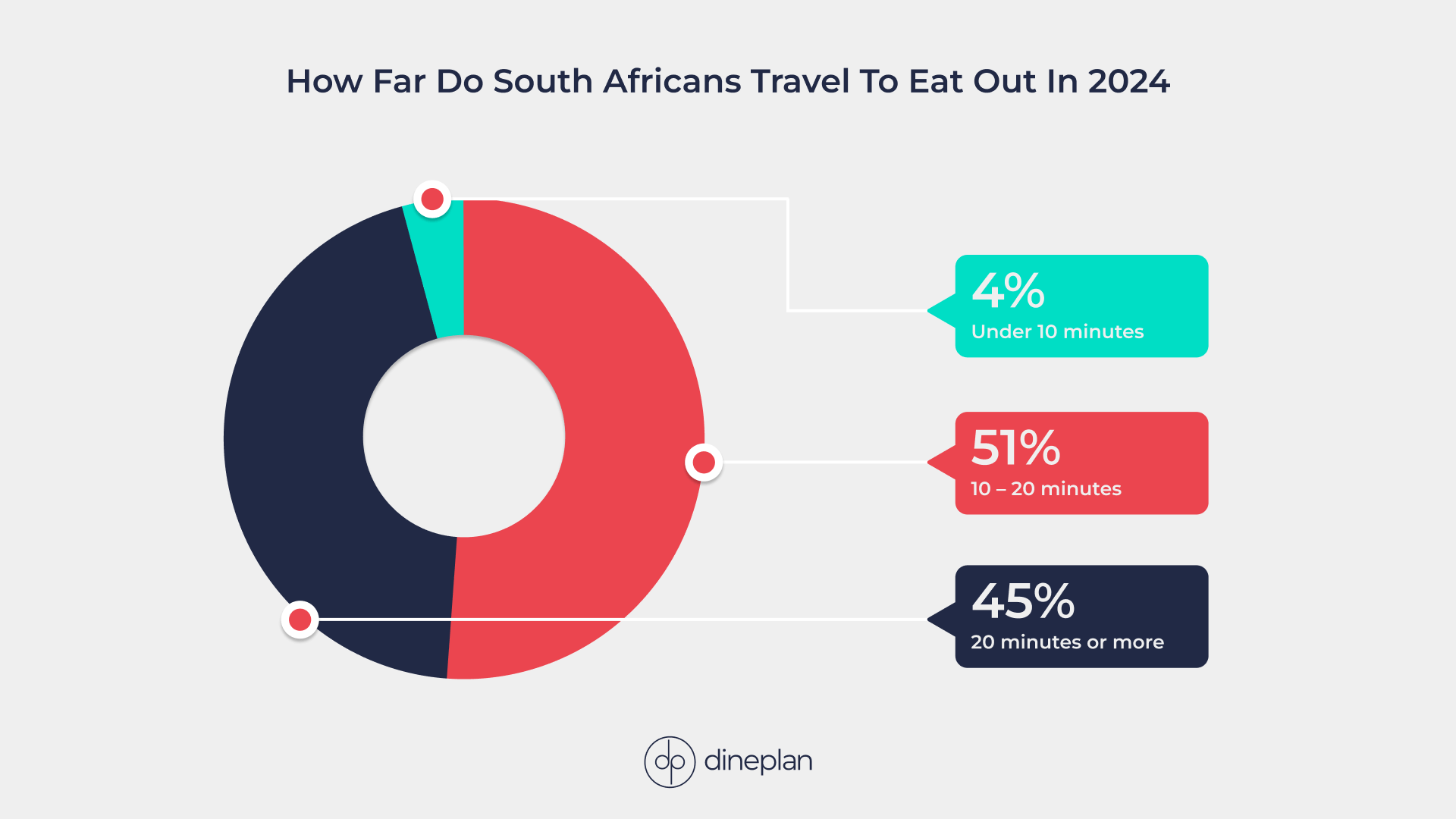
Our survey revealed that 51% of diners are willing to travel 10 to 20 minutes for a meal, while 45% often travel over 20 minutes. This shows that factors like cuisine, food quality, value for money, and service outweigh the need to stay close to home. Diners are looking for standout experiences, even if it means going beyond their local area.
Interestingly, only 4% of diners typically visit restaurants less than 10 minutes from home. This suggests that relying solely on local foot traffic may not be as imperative – or as failsafe – as we might think. Instead, offering an exceptional guest experience, whether it’s your food, atmosphere, or a unique offering, can draw diners from farther afield.
Dineplan survey results (2024)
2. Expand your marketing reach
With more diners willing to travel, it’s time to broaden your online marketing reach. Rather than focusing only on nearby customers, consider targeting those up to 20 minutes or more from your location.
Set your digital ad targeting radius to cover a 15-20 km area around your business location.
Platforms like Meta and TikTok Ads Manager, along with boosting posts on social media, allow you to set a radius for how far you’d like to target potential customers from your business. Use these features to reach diners within 15-20 km from your address. When creating your ads, highlight what makes your restaurant a must-visit, whether it’s your exceptional food, a special event, promotion or a new seasonal menu, and you’ll soon have people heading your way.
3. Exploring beyond competitive, high-rent zones
Given people’s willingness to travel 20 minutes or more for a great meal, restaurant owners don’t have to limit themselves to expensive, high-competition areas where property may be hard to come by. Don’t get us wrong – finding the right location is key to success – but you can explore more affordable locations that are still within easy reach of diners and food hubs while focusing on offering an experience that makes the extra time in the car worthwhile.
4. Leverage loyalty for long-term success
If diners are willing to travel for a great meal, they are also likely to make a return trip if they enjoyed the experience. Our survey revealed that the top reasons someone would return to a restaurant is great food (61%), value for money (15%), and excellent service (11%). By combining these with the willingness to travel, restaurants can turn first-time visitors into regulars who are happy to make the journey again and again.
5. Stand out from the crowd
To justify a longer travel time, restaurants need to offer something their local competitors don’t – whether it’s a unique menu, seasonal specials, a distinctive atmosphere or view, or an exciting lineup of events or live entertainment. The goal is to create an experience that makes the extra travel time worthwhile, turning your restaurant into a true dining destination.
6. Experience-driven dining
In the end, the willingness to travel indicates that many diners see eating out as an experience worth investing time in. For restaurants, this means focusing on what sets you apart and promoting those unique qualities. People are willing to go out of their way for a memorable dining experience, so highlight what makes your place special to build a strong, loyal customer base that stretches beyond your neighbourhood.
By understanding these insights and adjusting your marketing strategies, you can position your restaurant as a must-visit destination that diners are eager to travel for.

0 Comments