
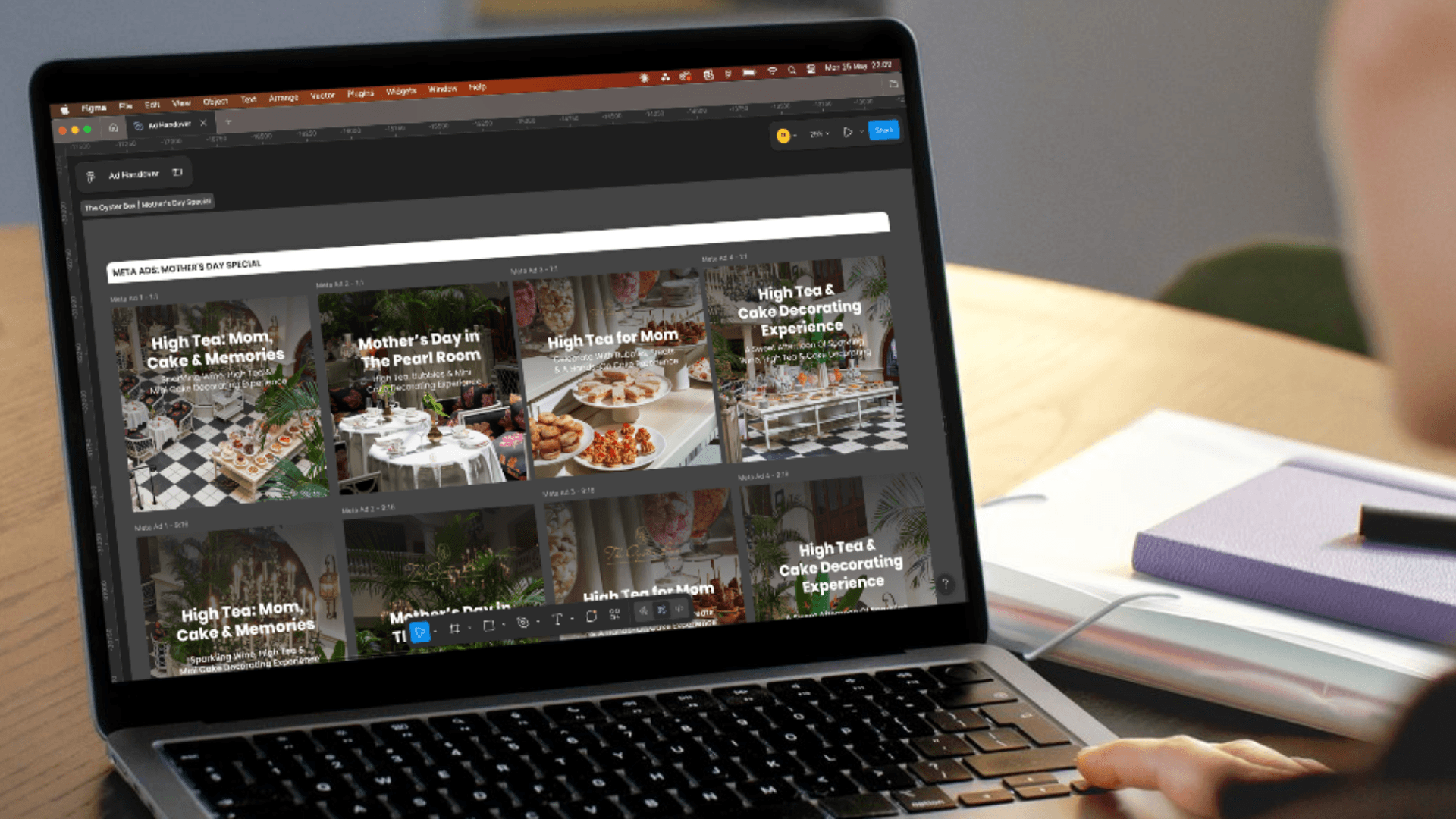
In the two weeks before Mother’s Day 2026, we ran Meta ad campaigns for seven restaurants across South Africa, including hotel restaurants, fine-dining venues, wine estates, and city spots. Different audiences, price points, and dining styles, all with the same goal: get in front of diners planning something special for Mom, and give them a reason to book now instead of leaving it for the last minute.
What the data showed afterwards is worth sharing, especially for restaurants trying to figure out what paid media actually contributes during big dining occasions.
What the numbers showed
Across the seven campaigns, the ads reached more than 533,000 unique people in just two weeks, with nearly one million total ad views. Around 18,700 people clicked through to a booking page.
But the number worth paying attention to is the click-through rate (CTR): the percentage of people who clicked the ad. The Meta industry average sits at 0.9%. Each of the seven campaigns beat that, ranging from 1.22% to 4.38%.
What contributed to this success rate? Spoiler: it’s not just down to good creative.
These ads were served to the Dineplan audience: people who are already searching for restaurants, already comfortable booking online, and already in the habit of making reservations through the app. In other words, the intent was already there before the ad even landed in their feed.
Advertising to a warm audience is the difference between asking someone to consider dining out and nudging someone who’s already planning to.
When you put a Mother’s Day offer in front of someone who is actively searching for a restaurant, they’re far more likely to engage with it. You don’t need to “sell” the idea of dining out or booking online. You’re simply helping them decide where to book, and convincing them to choose your venue over the one down the road.
This is why the CTRs from these campaigns were so strong: the audience was already leaning in.
The offering matters more than the ad
When comparing the strongest performing campaigns with the least, it is clear to see that the Mother’s Day offer itself was the biggest differentiator. Not the budget, location, or audience size.
The top two performers built menus specifically for the occasion:
- A Sunday lunch buffet with a clear price point and family-focused positioning achieved a CTR of 4.38% – nearly five times the industry average.
- A five-course Mother’s Day menu, purpose-built for the weekend, achieved a 3.41% CTR, also far outperforming the industry benchmark.
Meanwhile, the lower-performing campaigns mostly promoted standard menu items inside the Mother’s Day timeframe without creating a distinct experience around them. Even with the same warm audience, the ads were asked to do all the heavy lifting, which is a much harder sell.
People scrolling in the lead-up to Mother’s Day are looking for more than a plate of food. They want a memorable experience that feels intentional and emotionally rewarding, and the offering itself has to match this expectation.
Direct bookings are the floor, not the ceiling
This is the part worth reading twice.
Bookings directly attributed to the ads varied widely across the cohort, from 0 to 35 covers. Most landed between 0 and 7. If you stopped reading there, you’d conclude paid media doesn’t drive bookings. But that would be the wrong takeaway.
Across the same weekend, the cohort took hundreds of bookings through Dineplan and thousands across all channels combined: phone, email, restaurant website and even last-minute walk-ins. One restaurant took 176 bookings across the weekend; another took 132. Most of those weren’t tagged to an ad click, but that doesn’t mean the ads weren’t part of the decision-making process.
Here’s what actually happens: Someone sees an ad on Tuesday. They don’t click, but mention it on the family WhatsApp group two days later. Someone else Googles the restaurant on Saturday morning and makes a direct booking. The booking gets made, but the ad isn’t credited.
Direct attribution is the floor of your results. The actual contribution sits much higher and shows up in your total weekend volume.
What to take into your next campaign
Whether you’re planning Father’s Day, Heritage Day, year-end celebrations, or Valentine’s Day, the same three principles keep showing up:
- Build an offering for the occasion, not around it.
A specific menu, a fixed date, a clear price. Generic offerings during peak windows ask too much of the marketing. - Start with a warm audience.
Advertising to people who already book online and keep an eye out for experiences is the lowest-friction way to drive results. The Dineplan audience is already in the habit of booking restaurants online (and often), which means your ads will spend less time convincing and more time converting. - Measure on three layers.
Look at direct ad bookings, total bookings for the event or special, and the overall uptick in bookings across all days to see the full story.
Undeniable offer + warm audience + realistic measurement = this is where paid media earns its keep.

0 Comments